
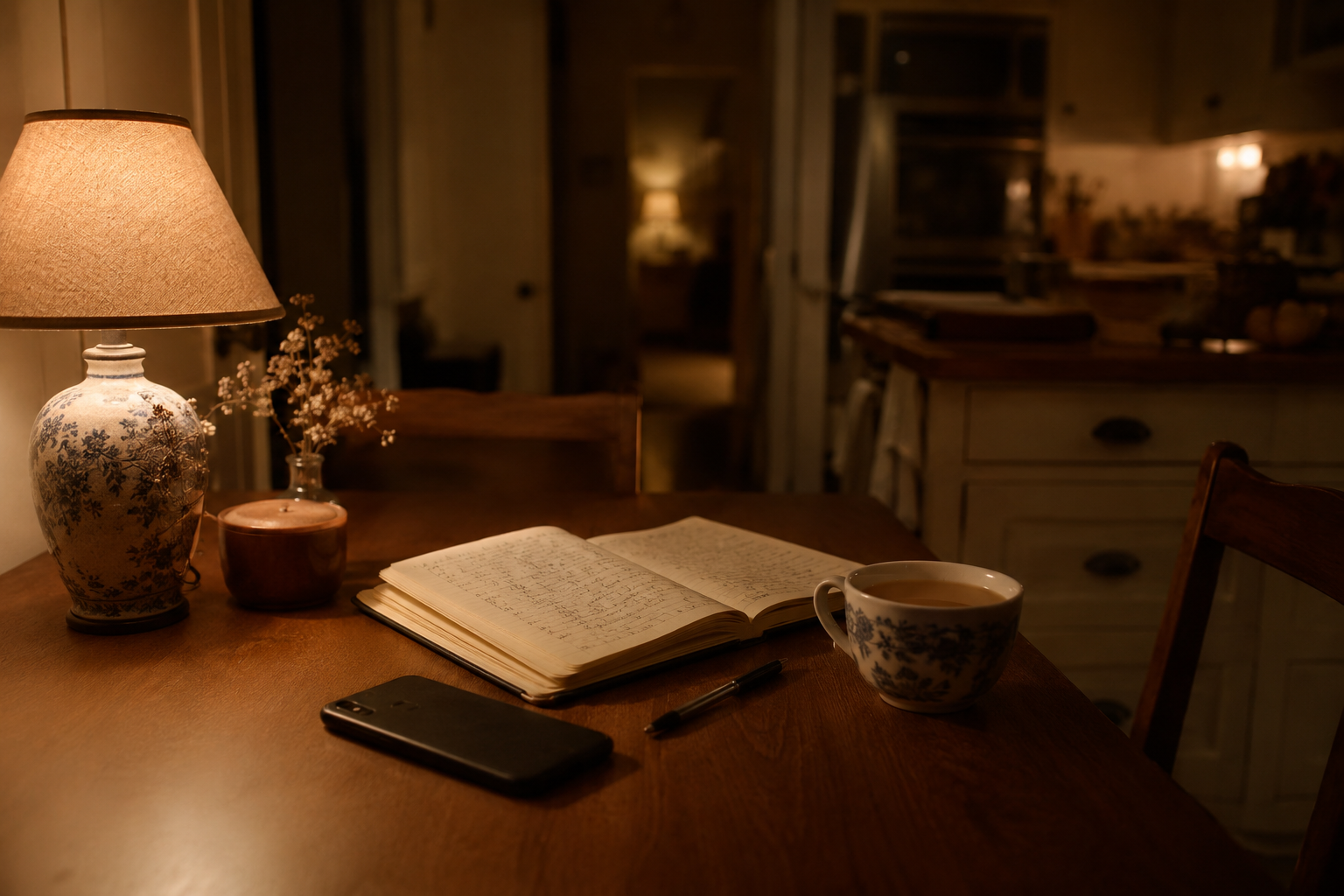
There is rarely one moment when an aging parent needs more help than they used to. There are signs — small ones, easy to miss, easier still to explain away. A burned saucepan. A repeated story. A bath skipped. A friend who hasn’t been mentioned in a while. Each one alone is nothing. Together, over six months or a year, they are the slowest and quietest emergency a family will face.
This is the conversation families have with themselves at two in the morning and rarely out loud. Below is a plain, honest map of what to look for — while there is still time to plan rather than react. It is written for the son or daughter who is reading at the kitchen table after everyone else has gone to bed, and for the parent who, somewhere underneath the “I’m fine,” would actually rather not be doing this alone.
Why the moment is so hard to name
Decline at the end of life is usually gradual, and a gradual change is the hardest kind for a family to see clearly. Both the parent and the people around them quietly adjust. The version of mum from three years ago becomes the version from last summer becomes the version standing in the kitchen now. Each step feels small, because the comparison is always with the step before it — not with the photograph of her on a hike from 2018.
Two other things make it harder. The first is that adult children only ever see snapshots — a weekend, a phone call, a holiday — and most of the change happens in the long, unobserved stretch in between. The second is pride. Many seniors hide decline carefully, because losing independence is frightening and because they don’t want to worry you. Reading the signs honestly is partly about learning to look at what is being shown — and partly about learning to look past it.
The everyday signs at home
If you can visit, walk through the house slowly with your eyes open. The signs you are looking for are practical and physical:
- The fridge. Expired food. Repeated identical meals. Almost nothing inside. Unexplained weight loss on a body you used to know.
- The stove and the kettle. Burned pots. A faint smell of singed metal. A red mark on the bottom of a once-clean saucepan.
- The mail. Unopened envelopes. Late notices. A pile that was not there in January.
- The medication. A pill organiser with the wrong day’s pills still in it. Doses missed, or — worse — doubled.
- Personal care. Stains on clothes that were always pristine. A change in body odour. Hair or nails that have stopped being looked after.
- Mobility. Unexplained bruises. A grab at the wall they didn’t need a year ago. Scuffed paint along the walking path between bed and bathroom.
One of any of these can be a bad week. Several at once is the slow accumulation talking.
The signs you can hear in a conversation
Phone calls do most of the work between visits, and they tell their own story:
- The same story told twice in one call, with no awareness the first time happened.
- Word-finding pauses — “the thing, the thing, you know what I mean” — where there used to be a noun.
- Forgotten birthdays, anniversaries and appointments — not once, but a pattern.
- Confusion about who someone is, what day it is, or where they live.
- Calls at strange hours, or calls about scams, threats, or someone moving things around the house.
- “I’m fine,” repeated too quickly, when something clearly isn’t.
The signs in their world
Some of the most reliable signs are not about the person at all. They are about the world that quietly drifts when no one is keeping it in order:
- Mail piling up at the door.
- A pet not being fed or walked on routine.
- The heat off in winter; the windows shut tight in summer.
- Lights left burning at three a.m.; lights off in rooms where they used to be on.
- Friends who used to come by, but haven’t mentioned a visit in months.
- Hobbies, the church group, the bridge night — quietly stepped away from.
Loneliness is the quiet emergency of old age. It looks like withdrawal long before it looks like anything more clinical.
The dementia warning signs that deserve a doctor’s visit
The Alzheimer Society of Canada publishes ten warning signs of dementia that every family should know.1 Briefly, they are: memory loss that affects day-to-day life; difficulty performing familiar tasks (a recipe she has made for forty years); problems with language; disorientation in time and place; impaired judgement; problems with abstract thinking; misplacing things in unusual places; changes in mood and behaviour; changes in personality; and a marked loss of initiative or interest.1
One sign in isolation is not a diagnosis. Several signs, in clusters, lasting more than a few weeks, deserve a calm conversation and a doctor’s appointment. The Alzheimer Society’s guide to getting tested is a gentle, practical place to begin.2
The crisis signals — when it is time to act now
Some signs are not part of a slow accumulation. They are the moment a family realises the conversation cannot wait any longer:
- A fall, especially one that ended in a hospital visit, a fracture, or a long time on the floor before help arrived.
- A wandering episode — found in pyjamas at the end of the street, found driving without knowing where she was going.
- A medication error that caused harm — a missed insulin, a double dose, a stopped heart pill.
- A house safety event — a small fire, a flood from a forgotten tap, a gas burner left on overnight.
- A hospital admission with a discharge plan that quietly assumes someone at home will manage what you both know they cannot.
One of these means it is time to make the move. Two of them means the move probably needed to happen six months ago.
Don’t forget yourself
The single most overlooked sign that a parent needs more care is what is happening to you. Caregiver burnout is real and well documented — a state of emotional, physical and mental exhaustion that builds slowly under the weight of looking after someone you love.4 The Mayo Clinic and the Cleveland Clinic both list the same picture: persistent fatigue, irritability, weight changes, sleep that won’t come or won’t end, anxiety, low mood, a quiet loss of interest in the parts of your own life that used to bring joy.45
If you are the son or daughter holding everything together, ask yourself, honestly: when was the last time I slept eight hours in a row? When did I last see my friends? When did I last laugh at something for no reason? Burnout is not a moral failing — it is an early warning that the system around your parent has more weight on it than one person can carry. Adding more care is not giving up. It is keeping you, and them, both standing.
When in doubt, ask a professional
Family doctors are usually the best first call. Ask them to do a basic cognitive screen, to review medications, and to make referrals — to a geriatrician if available, to a social worker, to community supports. In Canada, every province also runs publicly funded home care that begins with a free assessment of need; that assessment alone often tells a family a great deal about how much help is actually required.3
Bring a written list of what you have noticed. Bring a sibling if you can. Be specific. “Mum left the stove on twice in the last month” lands harder, and helps more, than “she seems a bit forgetful.”
Starting the conversation
The hardest part of this whole thing is not the noticing. It is the talking. A few small rules make it gentler:
- Start early, not at the crisis. A walk in the garden, an unhurried Sunday afternoon — not the day after the fall.
- Listen first, decide second. What does she want the next year to look like?
- Don’t lead with the move. Lead with the change — “I want next year to feel less heavy for both of us” — and let the move be one option, not the headline.
- Be honest about you. “I love you and I’m worried about you” works. “You can’t live like this” does not.
- Don’t do it alone. A trusted sibling, a family doctor, a friend who has been through this — any of them can carry some of the weight with you.
What “more care” can look like
“More care” is not one thing. It is a family of options, and they range from a few hours of help at home to a full move into a residence:
- Publicly funded home care — for people who need help with specific tasks, a few hours a week to a few hours a day, and qualify through a provincial assessment.
- Private home care — for filling the gaps the public system can’t cover. Hourly rates can rise quickly, especially overnight.
- Independent or assisted living — apartment-style residences that bundle meals and social life and, in the assisted version, some help with daily tasks.
- Personal care homes — small, residential homes for people who need real ongoing care, with everything (room, meals, 24-hour staff, the everyday) bundled into a single monthly fee.
- Long-term care — for the heaviest medical needs, run by the provincial health system.
(If money is the question quietly worrying you, our companion guide on what a care home really costs walks through all of these options side by side.)
A note from us
There is no perfect moment for the next conversation. There is only a window before a crisis decides for you — and inside that window, you have time to choose well, to visit places, and to bring your parent along with you in the deciding rather than to it.
If, after reading this, you would like to see what a small, real home for a senior actually looks like — without a brochure pitch or a callback queue — you are welcome to come and walk through one of our three Saskatoon homes. Stay for tea. Ask every honest question on the list above. Book a visit whenever you are ready.
Whatever you decide, and whoever you end up choosing, we hope the next few months feel a little less lonely.
Sources
The facts and figures in this guide are current as of May 2026 and drawn from the following sources:
- 10 warning signs of dementia — Alzheimer Society of Canada.
- How to get tested for dementia: tips for individuals, families and friends — Alzheimer Society of Canada.
- Care options, choosing the best plan for you and the person you care for — Government of Canada.
- Caregiver Burnout: what it is, symptoms and prevention — Cleveland Clinic.
- Caregiver stress: tips for taking care of yourself — Mayo Clinic.